


Pothole Repair: When a Patch Works and When You Need Full-Depth Repair
Every spring in Central Ohio, potholes show up in parking lots like clockwork. They are a liability for property owners, a headache for tenants, and hard on vehicles. The repair you choose decides whether that pothole is gone for good or back again next year.
Why Potholes Form
Potholes start with water. It gets into cracks, soaks the base under the asphalt, then freezes and expands. When it thaws, it leaves a void. Traffic pushes down on the weakened area until the surface breaks apart. Ohio has plenty of freeze-thaw cycles every winter, which is why this region sees so many of them.
That matters because a pothole is usually a base problem showing up on the surface. Treat only the surface and the problem stays.
Option 1: Cold Patch
Cold patch is a premixed material that can be shoveled into a hole and tamped down any time of year. It is a temporary safety fix. It is useful in winter when asphalt plants are limited and you need to stop a hazard fast, but it is not meant to last. Plan on replacing it with a permanent repair when the weather turns.
Option 2: Hot Mix Patch
A hot mix patch uses the same asphalt used for paving. The damaged area is cleaned, the edges are cut square, a tack coat is applied, and hot asphalt is placed and compacted with equipment. Done right, it bonds with the surrounding pavement and holds up far better than cold patch.
A hot patch is a good choice when the base underneath is still solid and the damage is limited to the upper layer.
Option 3: Full-Depth Repair
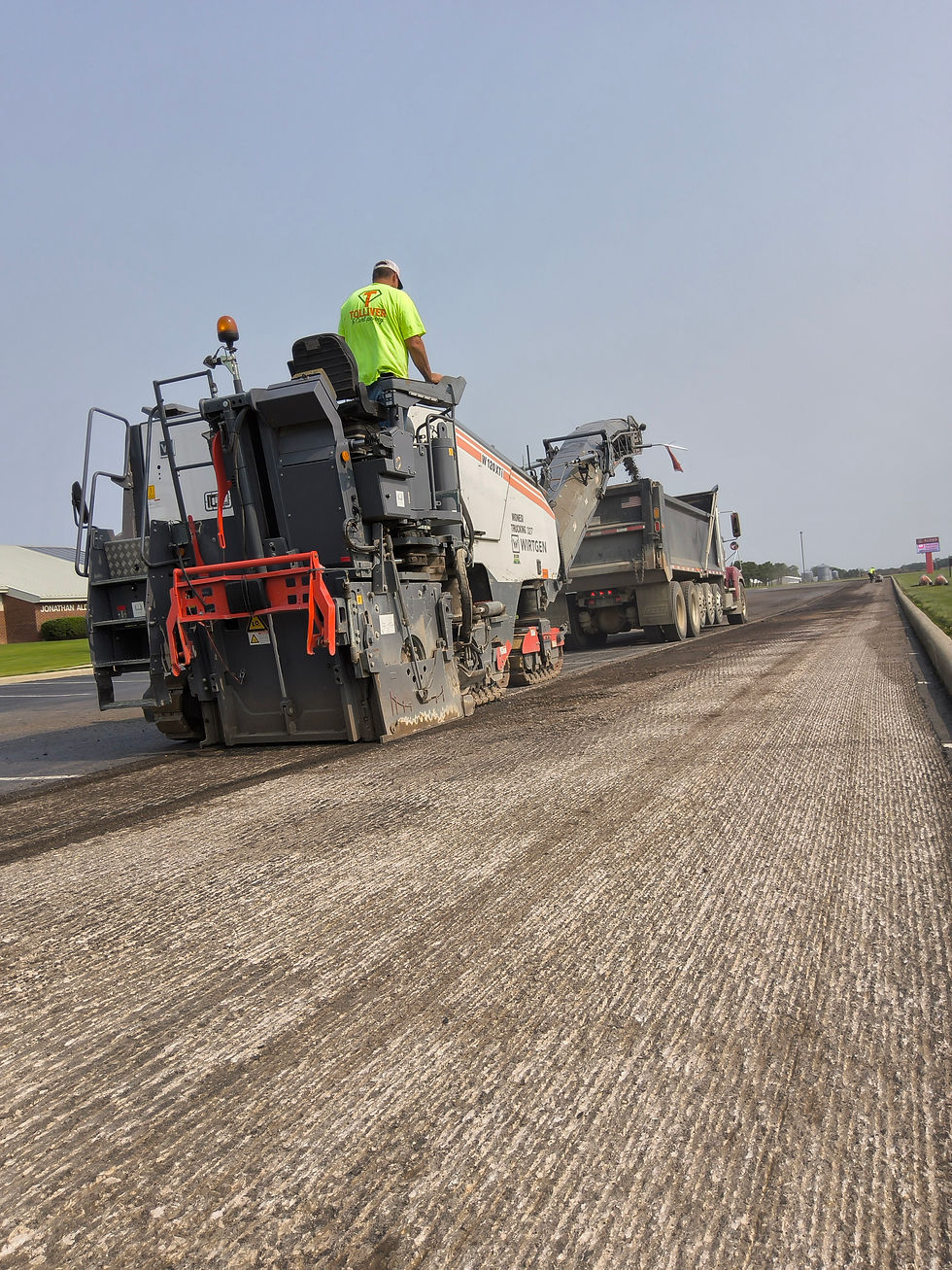
Full-depth repair removes the asphalt and the failed base in the damaged section. The base is rebuilt and compacted, then new asphalt is installed in layers. It costs more per square foot than a surface patch, but it fixes the cause instead of covering it.
This is the right call when:
The same spot has been patched more than once.
Alligator cracking surrounds the pothole.
The pavement flexes or sinks under traffic.
The area sees trucks, dumpsters or other heavy loads.
Fix the Water, Fix the Pothole
If potholes keep forming in the same part of the lot, look at drainage. Low spots, clogged drains and sinking catch basins all feed water into the base. Fixing the drainage along with the pavement is what stops the cycle. Our catch basin repair work often goes hand in hand with pothole repairs.
Do Not Wait for Spring to Plan
Potholes grow fast once they open. Mark them as soon as they show up, use cold patch for safety if needed, and get permanent repairs scheduled early in the season before calendars fill up.
Talk to Tolliver & Curl
We have been repairing commercial pavement in Central Ohio since 1952, and we will tell you which repair your lot actually needs. Learn more about asphalt repair and parking lot repair, call (614) 272-7770, or request a free estimate.


